Our lab is interested in how cell death impacts innate inflammation and immune responses.  We have a long-standing interest in the biology and signaling mechanism of tumor necrosis factor (TNF), a key cytokine that regulates many inflammatory diseases (e.g. rheumatoid arthritis, inflammatory bowel diseases etc), pathogen infections, and cancer.  Several key discoveries made by the PI during his graduate school and postdoctoral training include identification of one of the first cell cycle inhibitors, INK4d-p19 (Mol Cell Biol. 1995, cited over 300 times), and the discovery of the “pre-ligand assembly domain (PLAD)” that mediates TNF receptors signal transduction (Science 2000, cited over 800 times).

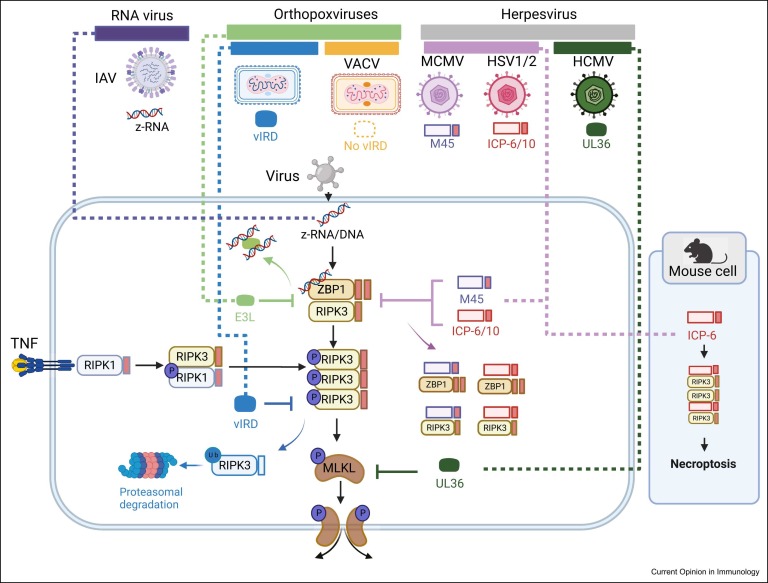
In recent years, we have focused our effort on elucidating the signaling mechanism of a novel form of inflammatory cell death termed necroptosis.  In 2009, our group identified Receptor Interacting Protein kinase 3 (RIPK3) as a central mediator of necroptosis (Cell, 2009, cited over 1000 times).  Current projects include (1) deciphering the signaling mechanisms of necroptosis, (2) interrogation of the biology of RIPK3 and related necroptosis signaling molecules in intestinal wound healing and inflammation, (3) elucidation of the role of necroptosis in pathogen infections, and many others. 

We aim to take the knowledge we gain from basic pathway discovery to better understand the principles of immune regulation.  We believe our endeavor will pave the way for more efficacious therapeutic intervention in auto-inflammatory diseases, cancers and pathogen infections.

Current research projects in the lab include the following broad areas.  Interested students and postdoctoral candidates are encouraged to contact Dr. Chan for more information on rotation projects and research opportunities.

The role of necroptosis signal adaptors in inflammatory diseases

We are interested in how the kinases RIPK1 and RIPK3, both of which have critical functions in cell death, contribute to injury-induced inflammation and tissue repair. 

滚动至顶部